Ever notice how some toddlers seem totally wrapped up in their own world, avoiding eye contact or getting super upset over tiny changes in routine? That's often where the journey of understanding autism spectrum disorder begins. Autism is basically a different wiring of the brain that affects how a person communicates, connects with others, and experiences everyday sights and sounds. Because it is a spectrum, no two kids with autism are exactly alike—some might talk a mile a minute about their favourite topics while barely making eye contact, while others might not speak at all. The biggest game-changer for parents is catching it early.
The reality of autism statistics in India hits right at the heart of our communities. Studies suggest that roughly 1 in 65 to 1 in 68 children in India are on the spectrum, which adds up to millions of kids and families navigating this daily. When you look at the big picture, autism is way more common than most people realize. Globally, the World Health Organization estimates that about 1 in 127 people live with autism. If you look at places like the US, the CDC numbers shoot up even higher, showing that roughly 1 in 36 kids are diagnosed, with boys getting the diagnosis about four times more often than girls.
Spotting the Signs of Autism in Kids
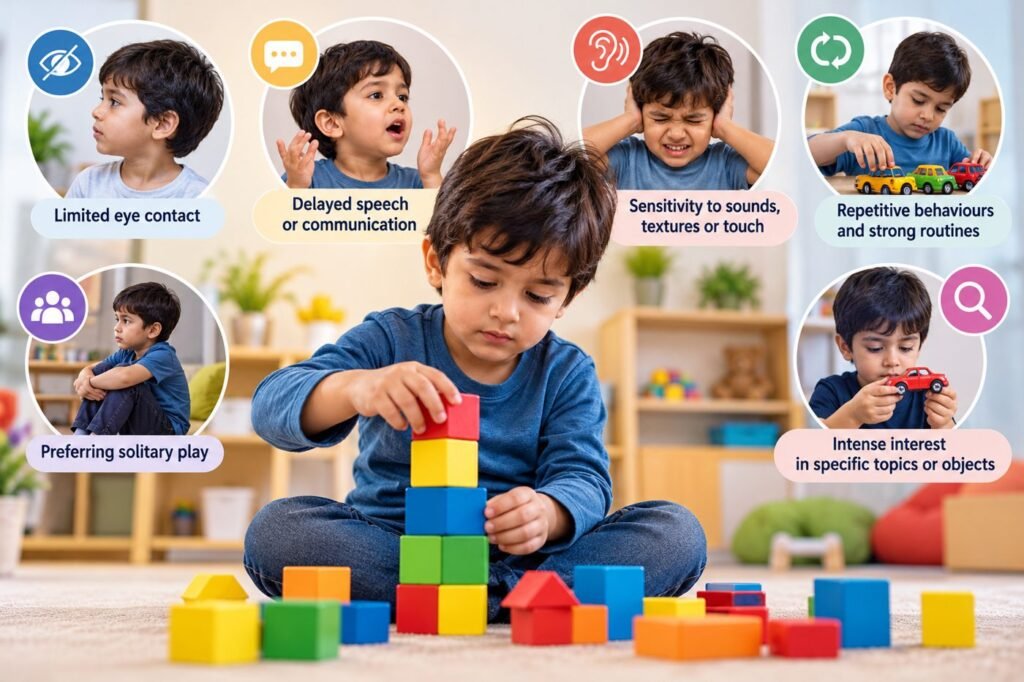
Autism can look different in every child, but early signs often fall into two areas:
Social & Communication Signs
a) Limited eye contact or response to their name
b) Delayed speech, babbling, or gestures
c) Difficulty pointing, sharing, or following gestures
d) Preferring solitary play.
Behaviour & Sensory Signs
a) Repetitive movements such as hand-flapping or rocking
b) Strong need for routines and distress with changes
c) Sensitivity to sounds, textures, or touch
d) Intense interest in specific topics or objects
One or two signs do not necessarily mean autism. If you have concerns about your child's development, speak with a paediatrician or developmental specialist. Early evaluation and appropriate treatment can make a meaningful difference.
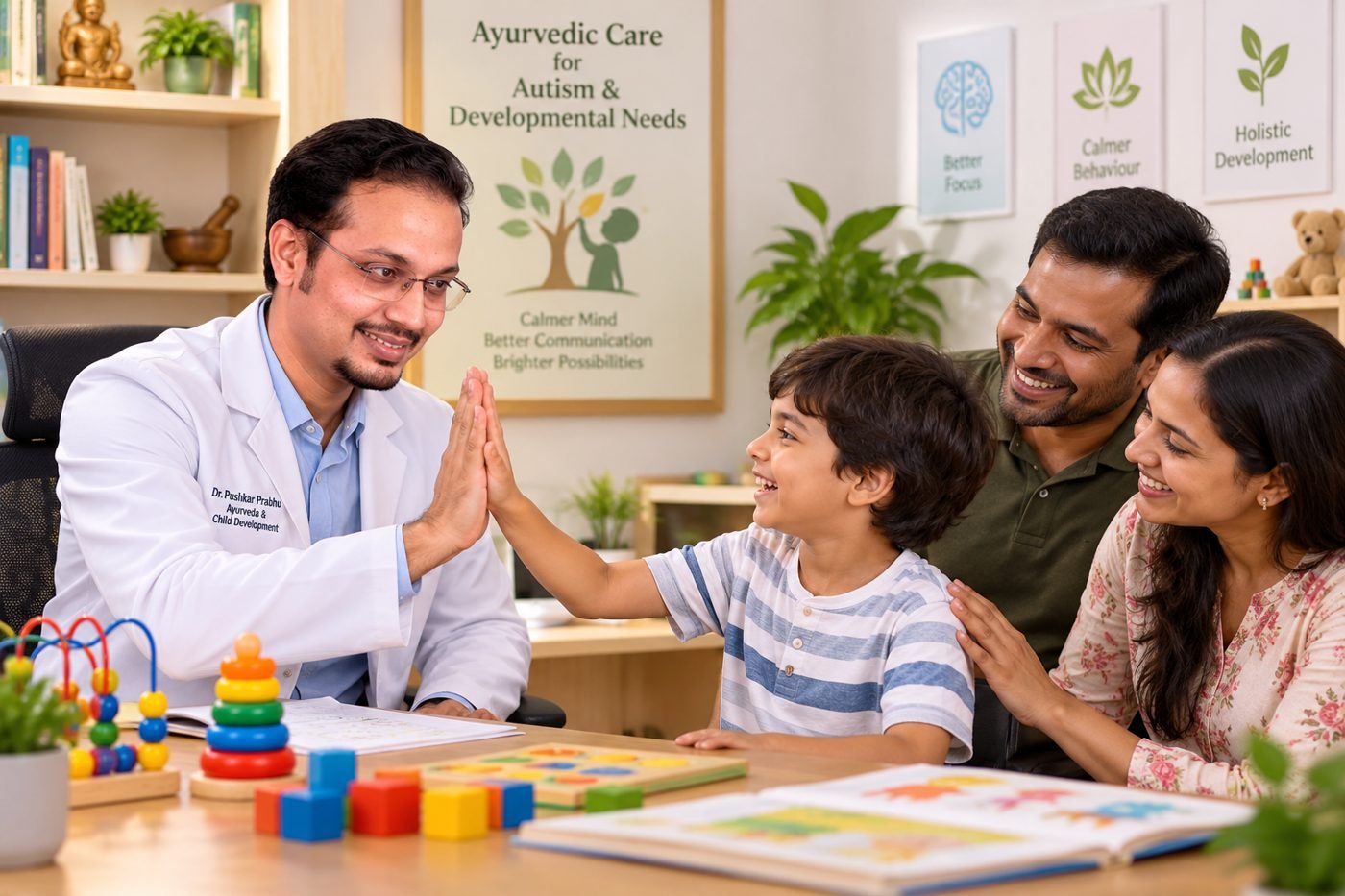
Dr. Pushkar Prabhu provides personalized Ayurvedic treatment for children with Autism Spectrum Disorder (ASD), focusing on the individual needs of each child. His approach considers the child’s age, constitution, developmental stage, behaviour, communication abilities, digestion, sleep, and overall health while developing an individualized treatment plan.
He also specializes in the Ayurvedic management and care of developmental delay and developmental disorders in children. Depending on the child’s needs, Ayurvedic treatment can be planned alongside appropriate developmental, speech, occupational, and educational interventions to support communication, behaviour, daily functioning, and overall development.
Ayurvedic treatment for Autism focuses on soothing the nervous system, nurturing brain tissues, supporting healthy digestion (the gut-brain connection), and bringing a sense of calm. Because every child is unique, care plans are always tailored specifically to the person's needs.
1) Medhya Rasayanas (Brain-Boosting Herbs):
These are natural tonics that support memory, focus, and mental clarity. Common herbs include:
a) Brahmi: It helps calm an overactive mind and supports daily learning.
b) Mandukaparni: It nurtures nerve health and sharpens memory.
c) Shankhpushpi: A wonderful traditional tonic known for easing anxiousness and improving concentration.
d) Vacha: It is used in very careful, small amounts to encourage speech and cognitive engagement.
e) Medicated Ghee Formulations (Ghrita): In Ayurveda, ghee is considered a powerful carrier that easily reaches deep nervous tissues to provide nourishment. Special blends like Brahmi Ghrita or Mahasarasvatshtam Ghrita are often recommended.
2) Panchakarma Therapies
For children and young people, gentle and soothing external therapies are always preferred:
a) Shirodhara: A warm, steady stream of herbal oils or milk gently poured over the forehead. It is deeply relaxing, helps quiet sensory overload, and promotes peaceful sleep.
b) Abhyanga & Swedana: Warm-oil massages using calming herbal oils, followed by mild herbal steam. This relaxes physical tension, grounds restless energy, and comforts the senses.
c) Nasya: Placing a couple of specialized herbal drops into the nostrils. Because the nose is considered a direct pathway to the head, this is done under expert care to support healthy nerve and brain function.
3) Ayurvedic Care for Autism and Developmental Needs
a) Sensory Regulation & Calming Care
A calm, low-stimulation environment can help to reduce sensory overload. Abhyanga (warm-oil massage) with suitable oils such as sesame oil or Kshirabala Taila can help to support relaxation and body awareness. Warm baths and calming bedtime routines may also promote relaxation.
b) Focus, Attention & Cognitive Development
A structured Dinacharya (daily routine) provides predictability and can help to children manage transitions more comfortably.
c) Motor Skills & Physical Coordination
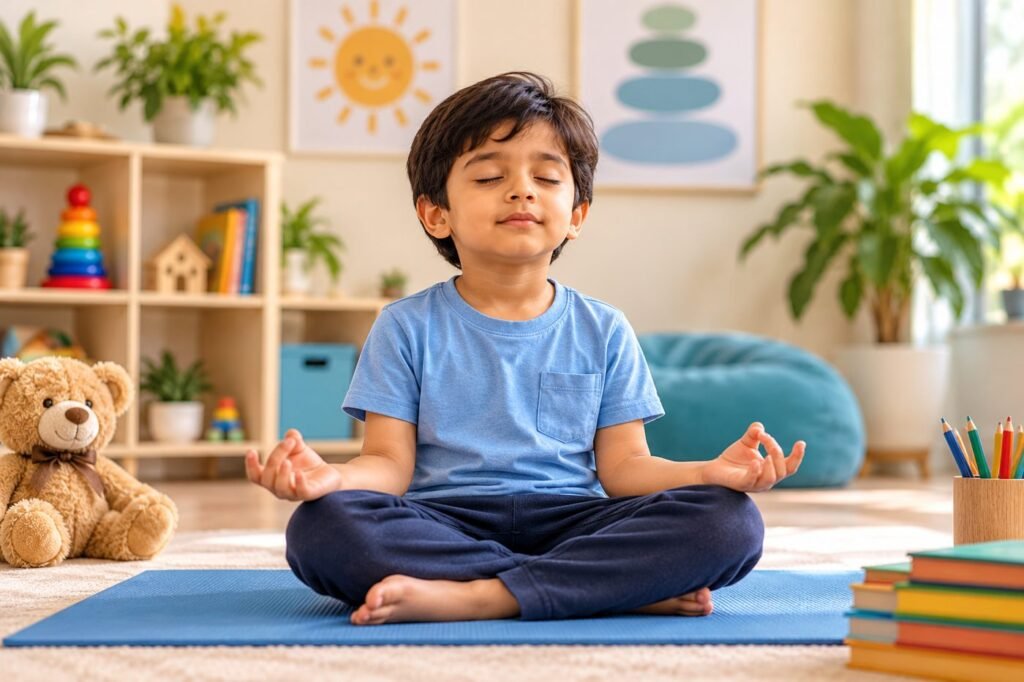
Outdoor play, age-appropriate yoga, balance activities, and rhythmic movement can complement occupational and physical therapy. A nutritious, balanced diet supports energy, growth, and overall development.
Rushvik Ayurveda is an Ayurvedic healthcare and wellness brand focused on bringing traditional Ayurvedic principles into modern healthcare. The approach combines classical Ayurvedic knowledge with personalized treatment planning, with emphasis on root-cause understanding, individualized care, lifestyle guidance, and research-backed formulations.
Rushvik Ayurveda offers Ayurvedic care for a range of health and wellness concerns, including Panchakarma, Rasayana therapy, digestive health, lifestyle-related disorders, chronic conditions, and supportive care. The team focuses on understanding each individual's constitution, health requirements, diet, lifestyle, and treatment goals before recommending an appropriate approach.
Email:
rushvikayurveda@gmail.com
Phone / WhatsApp:
+91 9819464448